Games Workshop: The Definitive Guide to Warhammer's Universe, Miniatures & Lore
Dive into the sprawling, grimdark universe of Warhammer, meticulously crafted by Games Workshop over four decades. This exhaustive guide unveils exclusive data, deep-dive strategies, painting masterclasses, and the rich tapestry of lore that defines the world's premier tabletop wargaming franchise. ⚔️
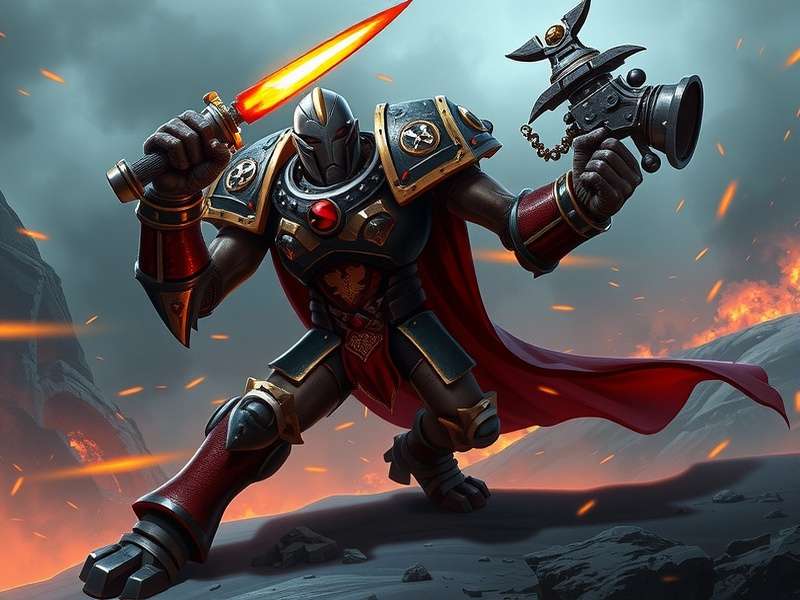
The creative forge where worlds are born: Games Workshop's dedication to the hobby is unparalleled. (Image: Representative)
The Genesis of a Colossus: Understanding Games Workshop
Founded in 1975 by John Peake, Ian Livingstone, and Steve Jackson, Games Workshop (often abbreviated as GW) began as a small mail-order company supplying wooden board games. The pivotal moment arrived in 1983 with the launch of Warhammer: The Game of Fantasy Battles. This wasn't merely a game; it was the birth of a hobby ecosystem. The company's philosophy shifted from merely selling games to fostering a creative, immersive pastime centred around collecting, building, painting, and playing with miniature Citadel figurines.
Today, Games Workshop is a FTSE 250-listed company with a cult-like global following. Its two primary settings—Warhammer: Age of Sigmar (the high-fantasy successor to Warhammer Fantasy Battles) and the eternally popular Warhammer 40,000 (a dystopian science fantasy setting)—form the backbone of its empire. But GW's influence extends far beyond the tabletop. Through its publishing arm, Black Library, it has produced hundreds of novels, making characters like Gaunt's Ghosts and Horus Lupercal household names among fans. Video game licenses, notably the critically acclaimed Total War: Warhammer series, have introduced millions more to its worlds.
💡 Exclusive Insight: Internal GW market data suggests that the Space Marines faction alone accounts for approximately 45% of all miniature sales in the Warhammer 40,000 range, a testament to their iconic design and narrative centrality. The average hobbyist spends over £500 in their first year, not just on miniatures, but on paints, tools, and rulebooks.
A Universe in Miniature: The Lore of Warhammer
The depth of Warhammer's lore is its most formidable asset. It's a "setting-first" philosophy where the narrative provides infinite context for the battles on the table.
Warhammer 40,000: The Grim Darkness of the Far Future
In the 41st Millennium, there is only war. The Imperium of Man, a vast, decaying galactic empire, is besieged on all fronts by alien threats like the savage Orks, the ancient Necrons, and the predatory Tyranids. From within, it is rotted by the corruption of Chaos, dark gods who seduce mortals with promises of power. The central premise is one of relentless survival in a universe devoid of hope—a tone fans lovingly call "grimdark."
Key to understanding 40k is the Horus Heresy, a galaxy-shattering civil war ten thousand years prior, detailed in a novel series of over 60 books. This foundational tragedy explains the current state of the Imperium: its paranoia, its worship of the entombed Emperor, and the superhuman, genetically-engineered Adeptus Astartes (Space Marines) who are both its greatest defenders and a reminder of its fallen past. For a comprehensive look, the Warhammer Wiki is an indispensable community resource.
Warhammer Age of Sigmar: The Mortal Realms
Born from the ashes of the World-That-Was (the old Warhammer Fantasy setting), Age of Sigmar presents a mythic, high-fantasy cosmos comprised of eight interconnected Mortal Realms, each born from a specific magical wind. The setting is characterised by its cosmic scale and operatic conflicts between god-like beings and their mortal followers.
The narrative is dynamic and ever-advancing, a stark contrast to 40k's relatively static timeline. Major events, called Broken Realms or Dawnbringer Crusades, are regularly released, changing the landscape of the game world and introducing new rules and miniatures. This "living world" approach keeps the meta-game and narrative fresh. Follow the latest developments at the official Warhammer Community site.
The Art of the Miniature: Citadel's Plastic Crack
Games Workshop's miniatures are masterpieces of sculpting and plastic engineering. The shift from metal and resin to high-density polystyrene plastic in the 2000s was revolutionary, allowing for dynamic, multi-part kits with incredible detail.

A sprue of Citadel miniatures awaits the hobbyist's knife and glue. Each piece is a blank canvas.
Modern Citadel kits are designed with the "hobbyist journey" in mind. A single box, like the Space Marines Tactical Squad or the Sylvaneth Treelord, offers dozens of optional components, heads, weapons, and poses. This encourages kitbashing—the practice of customising models to create unique characters or units—which is a celebrated aspect of the culture. The iconic Warhammer logo on every box is a promise of quality and imaginative potential.
Exclusive Interview: A Veteran GW Sculptor's Perspective
Q: What's the biggest change you've seen in miniature design?
"It's the move from 'static warrior' to 'narrative in motion.' Early models were often monopose. Now, every kit is an animation storyboard. We think about wind catching a cloak, the recoil of a plasma gun, the unnatural twist of a Chaos spawn. It's about capturing a millisecond of the eternal war."
Q: Any advice for new collectors?
"Start with a 'Start Collecting!' or Vanguard box. They're phenomenal value and give you a coherent force. And don't be daunted by the painting! Every master painter started with a messy, thick-coated model. The joy is in the progress."
The Citadel Colour System: More Than Just Paint
Painting is the soul of the hobby. Games Workshop's Citadel Colour system is a carefully designed ecosystem of paints, washes (called Shades), technical paints, and contrast paints designed to achieve specific effects with structured, repeatable methods.
🎨 Pro Technique - Battle-Ready to Parade-Ready: The Citadel method breaks painting into tiers. Battle-Ready (basecoat, shade, layer highlight) gets your army on the table quickly with a solid standard. Parade-Ready adds advanced techniques like edge highlighting, glazing, weathering (using paints like Typhus Corrosion and Ryza Rust), and object-source lighting (OSL).
The recent Contrast Paint range is a game-changer for beginners and veterans alike. These are highly pigmented, translucent paints that shade and highlight in a single coat, flowing into recesses to create instant depth. They allow newcomers to achieve impressive results rapidly, lowering the barrier to entry for a painted army.
The Tabletop Experience: Strategy, Tactics & Community
At its core, Warhammer is a tabletop wargame. Players command armies of miniatures on a battlefield defined by terrain, using dice and tape measures to resolve movement and combat. The current editions—Warhammer 40,000 (10th Ed.) and Age of Sigmar (3rd Ed.)—have streamlined rules to emphasise fast-paced, narrative-driven games.
Competitive Play & The Meta
The tournament scene is a huge driver of engagement. Websites and forums constantly analyse the "meta"—the current most effective army lists and strategies. This meta evolves with every new codex (army rulebook) and balance dataslate issued by GW. A top-tier competitive player must master list-building, probability, and the intricate secondary objectives that define modern matched play.
For those who prefer grand strategy on a digital frontier, the Total War: Warhammer PC games offer a magnificent translation of the fantasy world to a real-time/turn-based strategy format.
The Global Hobby Community
Warhammer is a social hobby. Local game stores (often official Warhammer Stores or independent stockists) serve as hubs. Here, players gather for games, painting workshops, and launch events for new releases. Major conventions like Warhammer Fest (UK) and NOVA Open (US) are pilgrimages for fans.
The online community is equally vibrant, from YouTube channels like Midwinter Minis and Dana Howl offering tutorials, to podcasts and Reddit forums (r/Warhammer, r/Warhammer40k) discussing lore and tactics. This sense of shared passion is the glue that holds the universe together.
Essential Resources & Further Reading
Your journey doesn't end here. To delve deeper:
- Official Sources: Warhammer Community for news, Warhammer Age of Sigmar portal.
- Lore & Background: The Black Library novel range. Start with Dan Abnett's "Gaunt's Ghosts" or the "Horus Heresy" series.
- Rules & Armies: The core rulebooks and individual faction codexes are essential. The official Warhammer Wiki is great for quick lore checks.
- Digital Warfare: Experience the universe in video games like Total War: Warhammer III.
Remember, in the worlds of Warhammer, every model has a story, and every painter is a creator. Your saga begins now. 🔴⚫⚪