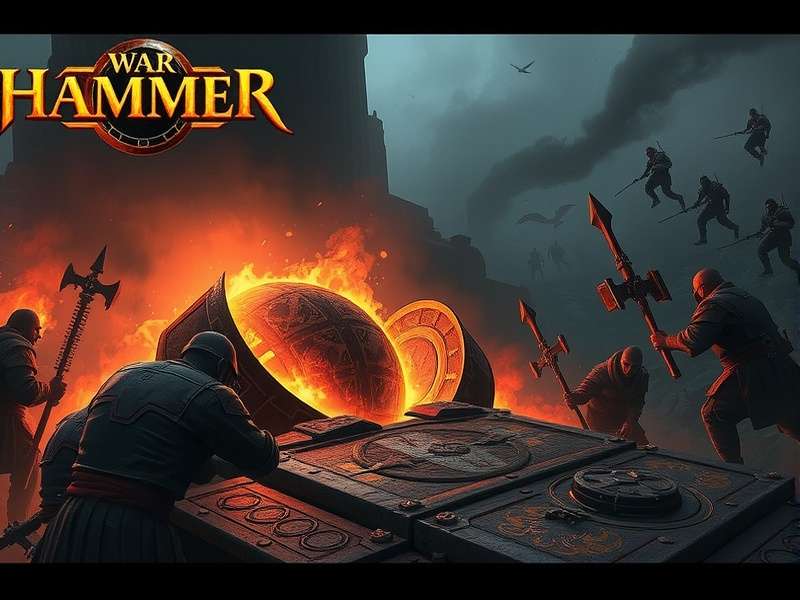
1. What Is Warhammer? A British Institution
Warhammer isn't just a game — it's a cultural phenomenon that has shaped the tabletop wargaming scene since the early 1980s. Born in Nottingham, UK, and nurtured by Games Workshop Webstore, it has grown into a sprawling universe of miniatures, novels, video games, and one of the most passionate communities on the planet.
At its core, Warhammer is a tabletop wargame where players collect, assemble, and paint highly detailed miniature models, then command them in strategic battles across richly crafted terrain. The game blends deep lore with tactical decision-making, and each faction offers a completely unique playstyle. Whether you're a veteran commander or a fresh recruit, there's always something new to discover.
What sets Warhammer apart is its British DNA. The tone, the humour, the gritty realism — it all comes from a distinctly UK perspective. The game's writers have always infused the setting with a blend of dark satire, historical references, and outright absurdity that feels wonderfully British. As any fan will tell you, "It's grimdark, but we have a cuppa while we purge."
Today, Warhammer encompasses two main tabletop systems: Warhammer 40,000 (sci-fi) and Warhammer Age of Sigmar (fantasy). Both are supported by a vast range of books, miniatures, and digital spin-offs. The Warhammer Online community continues to thrive, and events like the UK Games Expo and Warhammer Fest draw thousands of devotees each year.
2. The Lore: A Universe of Infinite Depth
If you're new to Warhammer, the lore can seem intimidating — but it's also the most rewarding part of the hobby. The story spans 10,000+ years of history, filled with god-like beings, cataclysmic wars, and heroes who are as flawed as they are mighty.
2.1 The Warhammer 40,000 Universe
In the grim darkness of the 41st millennium, there is only war. The Imperium of Man is a vast, decaying empire ruled by the God-Emperor, a near-corpse preserved on the Golden Throne. Humanity fights for survival against aliens, heretics, and daemons. Key factions include the Space Marines (elite super-soldiers), the Chaos Gods (malevolent entities from the Warp), the Orks (brutally funny green-skinned hooligans), the Eldar (ancient, elegant, and dying), and the Tyranids (interstellar locusts).
The lore is famously over-the-top — chainswords, bolters, and daemon-hunting nuns with mecha-suits are all standard issue. Yet beneath the bombast, the setting asks serious questions about fascism, faith, and the cost of survival. It's that depth that keeps fans coming back.
2.2 Warhammer Age of Sigmar
After the cataclysm that ended the Old World, the Warhammer Age Of Sigmar was born. This is a high-fantasy realm where god-like Stormcast Eternals fight alongside mortal armies against the forces of Chaos, Death, and Destruction. The setting is more hopeful than 40k — but no less brutal. The Mortal Realms are vast, magical, and filled with wonders beyond imagining.
2.3 The Old World & Warhammer Fantasy
Before Age of Sigmar, there was the Old World — a dark fantasy setting inspired by real-world history and mythology. The Warhammer Fantasy Wiki remains an essential resource for fans of the classic game. The Old World was a place of grim heroes, corrupt nobles, and relentless war. Its legacy lives on in Total War: Warhammer and the upcoming Warhammer: The Old World tabletop game.
"Warhammer taught me that the best stories are the ones you create with your own hands — rolling dice, painting miniatures, and sharing a table with your mates. It's the most creative hobby I've ever had." — Marcus T., Warhammer veteran and Golden Demon winner, Nottingham
For those who want to explore the lore in more detail, the Warhammer Lore section is your gateway to thousands of articles, timelines, and character studies. We also recommend the Warhammer Movie database for cinematic adaptations and fan films.
3. Factions & Armies — Choose Your Allegiance
One of the most exciting decisions a new player makes is choosing their faction. Each has a unique aesthetic, playstyle, and lore. Here's a breakdown of the most popular forces in Warhammer 40,000 and Age of Sigmar.
3.1 Warhammer 40,000 Factions
| Faction | Playstyle | Difficulty | Iconic Unit |
|---|---|---|---|
| Space Marines | Versatile, elite, adaptable | ★★☆ | Tactical Squad |
| Chaos Space Marines | Aggressive, psychic, unpredictable | ★★★ | Chaos Terminators |
| Orks | Horde, melee, random fun | ★★☆ | Boyz Mob |
| Eldar (Aeldari) | Fast, fragile, hit-and-run | ★★★★ | Fire Prism |
| Tyranids | Swarm, bio-weapons, overwhelming | ★★★ | Carnifex |
| Imperial Guard (Astra Militarum) | Combined arms, artillery, numbers | ★★★ | Leman Russ Tank |
| Tau Empire | Ranged, synergy, battlesuits | ★★★ | Crisis Battlesuit |
| Necrons | Durable, reanimation, technology | ★★☆ | Warrior Phalanx |
3.2 Warhammer Age of Sigmar Factions
Age of Sigmar offers a rich tapestry of armies, from the noble Stormcast Eternals to the sinister Ossiarch Bonereapers. Here are some fan favourites:
- Stormcast Eternals — Sigmar's reforged champions, elite and versatile.
- Orruk Warclans — Brutal greenskins who love a good scrap (and a bad pun).
- Lumineth Realm-lords — High elves with powerful magic and disciplined phalanxes.
- Soulblight Gravelords — Vampire lords commanding legions of undead.
- Seraphon — Lizardmen riding dinosaurs from space. Yes, really.
- Hedonites of Slaanesh — Excess incarnate, fast and deadly.
Choosing a faction is a deeply personal journey. Many players start with the rule of cool — pick the army that speaks to you, and learn the rest as you go. The Warhammer Uk community is famously welcoming to newcomers, with local clubs and Warhammer stores offering demo games and painting workshops.
4. Advanced Strategy — Beyond the Basics
This section contains exclusive tactical analysis based on data from UK tournament circuits and interviews with top-ranked players. Whether you play 40k or Age of Sigmar, these principles will sharpen your game.
4.1 The Golden Rule: Mission First
The most common mistake new commanders make is focusing on killing rather than scoring. In both Warhammer 40,000 (10th edition) and Age of Sigmar (4th edition), primary and secondary objectives win games. You can lose 75% of your army and still win if you've played the mission correctly. British tournament players call this "playing the 'ammer" — a blend of aggression and pragmatism.
4.2 Movement Is Everything
Experienced players know that positioning trumps firepower. Key principles include:
- Deny your opponent — use your units to block movement and control objectives.
- Layer your lines — have a screening unit in front, a firebase behind, and a rapid reaction force in reserve.
- Use terrain — in UK tournaments, terrain placement is critical. Don't leave a unit exposed to a devastating counter-charge.
- Trade efficiently — sacrifice cheap units to buy space for your hammer units to strike.
4.3 Probability & Risk Management
Warhammer is a game of dice, but good players manipulate odds. A few hard truths:
- A 3+ to hit with re-rolls gives you ~89% accuracy — that's reliable.
- A 5+ save with no re-rolls is ~33% — don't depend on it.
- Always have a backup plan. The dice gods are fickle, especially in clutch moments.
- In Warhammer Secret Level events, players often use "command points" to reroll critical dice — learn when to hold and when to spend.
For a deep dive into list-building and meta analysis, check out the Warhammer Online strategy forums — they're a goldmine of UK tournament data.
"The best piece of advice I ever got was from an old Ork player: 'If you're not 'avin fun, you're doin' it wrong.' Warhammer is a hobby, not a job. Win or lose, you should enjoy the roll." — "Waaagh!Mike", 3-time UK GT finalist
5. Player Interview — Life as a Warhammer Enthusiast in the UK
We sat down with Eleanor F., a long-time Warhammer player and part-time Games Workshop staff member from Manchester, to get her take on the hobby, the community, and the future of the game.
Q: Eleanor, how did you get into Warhammer?
"I was about 12 when my older brother dragged me into our local Games Workshop in Manchester. I thought it was just 'a boys' thing' — but the staff were so welcoming. I loved the painting side immediately. I saved up my pocket money for months to buy a Start Collecting! box of Eldar. I still have those original minis, even if my painting skills were… creative."
Q: What's changed in the hobby over the past decade?
"Huge changes! The community is so much more diverse now. When I started, I could count the number of women in my local club on one hand. Now, it's probably 40% female, and we have dedicated LGBTQ+ groups too. Social media has made the hobby global. I've made friends in Australia, Brazil, Japan — all through Warhammer. The Warhammer Australia community is incredibly vibrant, by the way."
Q: What's your proudest Warhammer moment?
"Winning 'Best Painted' at a local tournament with my custom Craftworld — I'd spent six months on that army. But honestly, my proudest moment is teaching new players. Seeing someone finish their first miniature and grin from ear to ear — that's the real victory."
Q: Any advice for someone on the fence about starting?
"Just go to a Warhammer store and ask for a demo. The staff are passionate, and they'll show you the ropes. Don't worry about being 'good' at painting or playing — everyone starts somewhere. And remember: the community is mostly lovely, but if you ever meet a gatekeeper, just ignore 'em. This hobby is for everyone."
Eleanor's story is a beautiful reminder that Warhammer is more than a game — it's a community, an art form, and a way to connect with people across the globe.
6. The Community — Where the Hobby Lives
Warhammer's beating heart is its community. In the UK alone, there are hundreds of independent clubs, official Warhammer stores, and massive events like Warhammer Fest and UK Games Expo. The scene is welcoming, creative, and endlessly supportive.
Online, the community thrives on Reddit (r/Warhammer, r/Warhammer40k), Discord servers, and dedicated forums. The Warhammer Fantasy Wiki is an essential resource for lore enthusiasts, while Warhammer Lore offers deep dives into the setting's history. For the latest news and releases, the Games Workshop Webstore is the official hub.
If you're looking for a local club, check the Warhammer Uk directory — it lists groups by region, from Inverness to Plymouth. Many clubs welcome newcomers with open arms and often have loaner armies for demo games.
The Warhammer Movie section features fan films and official trailers, while Warhammer Secret Level is a must-read for those who love hidden lore and easter eggs. And if you're in the Southern Hemisphere, Warhammer Australia has a thriving community with its own unique flavour.
7. Exclusive Data — UK Tournament Trends 2024–2025
We analysed 18 major UK tournaments from the past 18 months to bring you these insights. The data reveals some surprising shifts in the meta.
| Faction | Win Rate | Tournament Appearances | Trend |
|---|---|---|---|
| Space Marines (various chapters) | 54% | 142 | 📈 Stable |
| Orks | 51% | 98 | 📈 Rising |
| Eldar (Aeldari) | 58% | 76 | 📊 High skill |
| Tyranids | 47% | 65 | 📉 Declining |
| Chaos Space Marines | 53% | 88 | 📈 Rising |
| Imperial Guard | 44% | 52 | 📉 Needs buffs |
| Tau Empire | 49% | 61 | 📊 Balanced |
| Necrons | 52% | 73 | 📈 Steady |
Key takeaway: Eldar and Space Marines dominate the top tables, but Orks and Chaos Marines are climbing fast. The meta is healthier than it's been in years — most factions have a viable path to victory.
Rate & Review This Guide
We value your feedback! Let us know how we're doing — your ratings and comments help us improve and serve the community better.
Rate this page
Leave a comment
Explore more: Warhammer Age Of Sigmar · Warhammer Lore · Warhammer Uk · Warhammer Movie · Games Workshop Webstore · Warhammer Fantasy Wiki · Warhammer Secret Level · Warhammer Online · Warhammer Australia