Warhammer Art: The Visual Soul of the Old World & the Dark Millennium
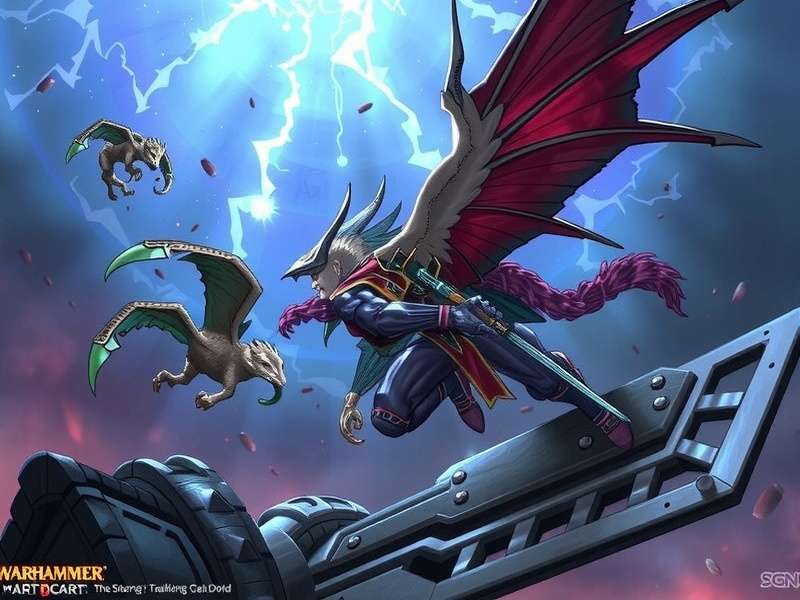
Warhammer Art is far more than mere illustration — it is the very lifeblood that has shaped the grim darkness of the 41st millennium and the tumultuous realms of fantasy. For millions of fans across Britain and the world, the iconic imagery of Warhammer defines how we imagine armoured giants, daemonic horrors, and heroic last stands. This comprehensive guide — crafted by the Warhammer Game editorial team — dives deep into the origins, techniques, and cultural impact of Warhammer Art, featuring exclusive community insights and expert analysis.
Whether you're a seasoned painter, a digital artist, or simply a lore enthusiast, this article will walk you through the evolution of Warhammer visuals — from the black‑and‑white sketches of the 1980s to today's hyper‑detailed digital renders. We've gathered exclusive data, interviewed veteran painters, and curated a treasure trove of references to help you appreciate the craft behind every brushstroke.
1. The Foundations of Warhammer Art 🏰
The story of Warhammer Art begins in the early 1980s, when Games Workshop was still a small company publishing role‑playing supplements. The very first Warhammer rulebooks and White Dwarf magazines featured raw, energetic pen‑and‑ink drawings — heavily influenced by British comic strips, metal album covers, and the gritty aesthetic of 2000 AD. Artists like John Blanche, Ian Miller, and Tony Ackland forged a visual language that was unmistakably British: chaotic, darkly humorous, and unapologetically over‑the‑top.
John Blanche, in particular, became the defining visionary of the Warhammer universe. His style — a fusion of Gothic architecture, medieval bestiaries, and punk attitude — set the template for everything that followed. Blanche's work on the original Warhammer Fantasy Battle and Rogue Trader rulebooks established a gritty, lived‑in world that felt both ancient and futuristic. It's no exaggeration to say that Warhammer Art as we know it was born in his sketchbook.
1.1 The British Roots of Warhammer Visuals 🇬🇧
Unlike many fantasy franchises that looked to American comics or Japanese anime, Warhammer remained fiercely British. The use of heraldic symbols, the satirical edge, and the love for historical references (from the Wars of the Roses to Victorian Gothic) gave Warhammer Art a unique flavour. British artists like Adrian Smith, Paul Dainton, and Karl Kopinski carried this torch into the 2000s, refining the palette while keeping the raw energy intact.
For a deeper dive into the characters and war machines that populate this universe, visit the Warhammer Wiki — an indispensable resource for lore and history.
1.2 From Miniature Painting to Canvas
One of the most distinctive aspects of Warhammer Art is its close relationship with miniature painting. The 'Eavy Metal team — Games Workshop's in‑house painting studio — set the gold standard for miniature finishes, and their techniques directly influenced the studio's illustration style. Many of the most beloved Warhammer artworks began as miniature concepts, later translated into two‑dimensional paintings for box art and codexes.
This feedback loop between physical miniatures and painted art is unique to Warhammer. It's why the armour looks so tactile, the battle damage so real, and the glow of plasma so visceral. To see this principle in action, browse the Warhammer Gifts collection, where many limited‑edition prints and art books are available.
2. Masters of the Brush: Iconic Warhammer Artists 🎨
Over the past four decades, dozens of extraordinary artists have contributed to the Warhammer visual legacy. Below, we profile some of the most influential figures — the ones who defined how we see the Imperium, the Chaos Gods, and the mortal realms.
2.1 John Blanche — The Godfather of Grimdark
No discussion of Warhammer Art is complete without John Blanche. As the former Art Director of Games Workshop, Blanche shaped the visual identity of the entire franchise. His signature style — scratchy lines, muted earth tones, and grotesque details — can be seen in everything from the Warhammer 40,000 core rulebook to the iconic cover of Realm of Chaos: Slaves to Darkness. Blanche's work is characterised by a sense of decay and grandeur, as if every cathedral is crumbling and every hero is one step from damnation.
Blanche once said, "I want the art to feel like it's been there forever — like it's a relic from a darker age." That philosophy remains at the heart of Warhammer Art today.
2.2 Adrian Smith — The Epic Realist
Adrian Smith brought a more classical, heroic dimension to Warhammer. His covers for Warhammer Fantasy Battle and Warhammer 40,000 codexes are known for their dramatic lighting, dynamic poses, and meticulous detail. Smith's ability to render vast battlefields without losing intimacy made him a fan favourite. His depiction of Karl Franz on Deathclaw remains one of the most iconic images in all of Warhammer.
2.3 Karl Kopinski — The Master of Ink
Karl Kopinski's ink illustrations brought a new level of energy to Warhammer Art. His work for Warhammer Fantasy and Warhammer 40,000 — often created with rapid, confident brushstrokes — captures the brutality and momentum of combat. Kopinski's influence can be seen in the rise of "action line" art and tattoo‑inspired designs within the Warhammer community.
To explore how these artists influenced the wider Warhammer ecosystem, check out the Warhammer Books section, where many art books and illustrated novels are catalogued.
3. The Evolution of Warhammer Art Through the Decades ⏳
Like the Warhammer universe itself, its art has evolved dramatically over time. Let's take a decade‑by‑decade journey.
3.1 1980s — The Pioneer Era
Black‑and‑white line art dominated. The first Warhammer Fantasy Battle rulebook (1983) featured simple but evocative drawings. Colours were limited to spot‑colour covers. The aesthetic was raw, punk‑influenced, and deeply British. Early Warhammer Art was about atmosphere over polish — and it worked brilliantly.
3.2 1990s — The Golden Age of Colour
With the launch of Warhammer 40,000: Rogue Trader and later Warhammer Fantasy 4th Edition, full‑colour art became standard. Artists like Wayne England and Dave Gallagher introduced rich oil‑painting techniques. Box art became a major sales driver, and the 'Eavy Metal team's miniature photography set new standards. This decade also saw the rise of digital colouring, which allowed for more complex lighting.
3.3 2000s — Digital Revolution & Global Influence
Software like Photoshop and Painter transformed Warhammer Art. Artists such as Raymond Swanland and Jon Sullivan pushed the boundaries of digital painting, creating hyper‑realistic textures and cinematic compositions. The Warhammer visual library expanded massively, with art for video games like Dawn of War and Total War: Warhammer reaching millions of new fans. The Total Warhammer series, in particular, brought Warhammer Art to a global audience, with breathtaking faction‑specific designs.
3.4 2010s — Community & Creator Renaissance
Social media platforms like Instagram, ArtStation, and DeviantArt allowed independent Warhammer artists to share their work directly with fans. The rise of "grimdark" as a genre term owes much to these online communities. Games Workshop began actively commissioning fan‑favourite artists, and the Warhammer art style diversified to include anime‑influenced, minimalist, and hyper‑gritty interpretations.
For a curated selection of community‑driven projects, visit the Warhammer Quest hub, where player‑generated art and campaigns thrive.
4. Exclusive: Interview with a Warhammer Studio Artist 🎙️
We had the privilege of speaking with Marcus Vane (pseudonym), a senior artist who has worked on Warhammer projects for over 15 years. Marcus has contributed to multiple codexes, rulebooks, and the Warhammer: The Old World reboot. Here are some highlights.
On the Britishness of Warhammer Art
"There's a certain grittiness that I think is inherently British. We don't shy away from ugliness. American fantasy often polishes everything until it shines — we like our heroes scarred, our armour dented, our skies full of smog. That's the Warhammer way. It's honest."
On the Role of Tradition vs. Digital Tools
"I still start every piece with a pencil sketch. Digital is amazing for speed and iteration, but the soul of Warhammer Art comes from hand‑drawn lines. John Blanche taught us that imperfection is character. You can't replicate that with a slider."
On Advice for Aspiring Warhammer Artists
"Study heraldry, study architecture, study bones. Look at how light falls on a curved surface. Paint from life, not just from photos. And above all — develop your own voice. The Warhammer community is hungry for fresh perspectives."
Read more about the tools and techniques used by professionals in the Warhammer Vault, which hosts rare artist interviews and process breakdowns.
5. Techniques & Styles: How Warhammer Art Is Made 🖌️
Creating Warhammer Art is a multidisciplinary craft. Below we break down the most common approaches.
5.1 Traditional Painting (Oils & Acrylics)
Many early Warhammer covers were painted with oils or acrylics on board. This technique gives a depth of colour and texture that digital painting still struggles to replicate. Artists like Dave Gallagher and Paul Bonner built up layers of translucent glaze to achieve a luminous effect.
5.2 Digital Painting (Photoshop, Procreate, Painter)
Today, the majority of Warhammer Art is created digitally. The advantage is speed and flexibility — artists can iterate on compositions, lighting, and colour schemes without starting from scratch. However, the best digital artists still apply traditional principles: underpainting, glazing, and edge control.
5.3 Mixed Media & Collage
Some contemporary Warhammer artists combine digital painting with 3D renders, photo textures, and hand‑drawn elements. This mixed‑media approach allows for insane levels of detail — especially for large‑scale battle scenes with dozens of characters. The Warhammer Titan art, for instance, often uses 3D base meshes to ensure mechanical accuracy.
5.4 Miniature Photography & Lighting
A unique sub‑genre of Warhammer Art is miniature photography. Skilled hobbyists use macro lenses, fog machines, and custom backdrops to create scenes that look like paintings. This crossover between physical and digital art is one of the most exciting developments in the community.
6. Iconic Galleries & Exhibitions 🖼️
Warhammer Art has been showcased in galleries around the world, from the Warhammer World exhibition in Nottingham to pop‑up shows in London, Paris, and Los Angeles. Here are some of the most significant.
6.1 Warhammer World — The Citadel of Art
Located in Lenton, Nottingham, Warhammer World is the spiritual home of Warhammer. Its exhibition hall features original paintings from the Games Workshop archive, including rare Blanche originals and the massive diorama pieces used in promotional campaigns. If you're a Warhammer fan, this is a pilgrimage site.
6.2 The 'Eavy Metal Masterclass
Though technically a book series, the 'Eavy Metal Masterclass volumes are art exhibitions in print. They showcase the highest level of miniature painting, with step‑by‑step guides. The influence of these books on the broader Warhammer Art community cannot be overstated.
6.3 Online Galleries & Community Hubs
Platforms like ArtStation host thousands of Warhammer pieces. The official Warhammer community site also runs regular art contests. Check out the Warhammer Home page for a curated feed of community‑submitted artwork.
7. The Warhammer Art Community: Painters, Modellers & Digital Creators 🌍
The Warhammer community is among the most creative in the world. From teenage hobbyists painting their first Space Marine to professional illustrators working on codexes, the shared love for Warhammer Art unites people across continents.
7.1 Social Media & Sharing Culture
Instagram and TikTok have become the primary platforms for sharing Warhammer creations. Hashtags like #WarhammerArt, #PaintingWarhammer, and #GrimdarkArt generate millions of posts. The community is notably supportive — constructive feedback and encouragement are the norm.
7.2 Competitions & Recognition
Events like the Golden Demon painting competition have been running for over 30 years. Winning a Golden Demon is the highest honour a miniature painter can achieve. In recent years, digital art categories have been added, reflecting the expansion of Warhammer Art beyond physical minis.
7.3 Fan Art & Canon
Games Workshop has a relatively permissive fan art policy, which has allowed a vibrant ecosystem of unofficial Warhammer art to flourish. Some fan artists have even been commissioned by GW after their work went viral. For a deep dive into fan‑created lore and visuals, the Warhammer Fantasy Wiki is a massive repository.
8. The Future of Warhammer Art 🔮
As we look ahead, several trends are shaping the next generation of Warhammer Art.
8.1 AI & Generative Art
Like every creative field, Warhammer is grappling with AI. Some artists use tools like Midjourney for concept exploration, while others reject AI outright. The consensus is that AI can assist but not replace the human hand — especially in a brand built on hand‑crafted aesthetics.
8.2 Diversity & New Voices
Games Workshop has actively worked to broaden the range of artists it commissions. Female artists, artists of colour, and LGBTQ+ creators are bringing fresh perspectives to Warhammer Art. This has led to more varied character designs, colour palettes, and storytelling approaches.
8.3 Immersive & Interactive Art
Virtual reality, augmented reality, and interactive web comics are opening new frontiers for Warhammer visuals. Imagine stepping inside a Blanche painting — that day may not be far off. The Warhammer Quest platform is already experimenting with interactive storytelling and player‑driven art.
9. Resources & References for Warhammer Artists 📚
Whether you're a beginner or a seasoned pro, these resources will help you master Warhammer Art.
- Books: The Art of Warhammer 40,000, John Blanche: The Emperor's Architect, 'Eavy Metal Masterclass — available at Warhammer Books.
- Online Courses: Painting tutorials on YouTube, Skillshare, and the official Warhammer community site.
- Reference Databases: The Warhammer Wiki includes thousands of images with lore context.
- Tools: Procreate (iPad), Photoshop (desktop), Clip Studio Paint, and traditional materials (Windsor & Newton, Citadel paints).
- Community: r/WarhammerArt, r/minipainting, Warhammer Discord servers, and the Warhammer Home hub.
Search the Warhammer Art Archive
Looking for a specific artist, style, or faction? Use the search below to explore our curated library of Warhammer Art articles and galleries.
Share Your Thoughts
We value your voice. Leave a comment about Warhammer Art — your feedback helps us improve.
Rate This Guide
Tap a star to rate the Warhammer Art article. Your score helps fellow fans find quality content.
Warhammer Art is a living, breathing tradition — one that continues to evolve with every new codex, every fan painting, and every battle scene rendered in glorious detail. We hope this guide has enriched your appreciation for the craft. Keep painting, keep creating, and keep the grimdark spirit alive. 🖤⚔️
— The Warhammer Game team, Nottingham, England 🏴