Warhammer Online: Age of Reckoning – A Realm of Eternal Conflict
Warhammer Online: Age of Reckoning (WAR) wasn't just another MMORPG; it was a grand, bloody experiment in large-scale fantasy warfare. Launched in 2008 by Mythic Entertainment, it plunged players into the grimdark world of Games Workshop's Warhammer Fantasy Battles with one core promise: Realm vs. Realm (RvR) conflict is not an endgame activity—it is the game. While its official servers sunsetted in 2013, its legacy burns brighter than ever through dedicated private servers and a fiercely loyal community. This guide is your tome of knowledge, compiled from years of player experience, developer insights, and exclusive data.
Overview & Development Saga
The journey to WAR's launch was as turbulent as a Chaos invasion. Initially developed by Climax, the project was later taken over by Mythic, fresh from the success of Dark Age of Camelot. Mythic's vision was bold: to create a world where PvE and PvP were seamlessly integrated, and where player actions could literally change the landscape of the game world through the "Tome of Knowledge" and "Public Quest" systems.
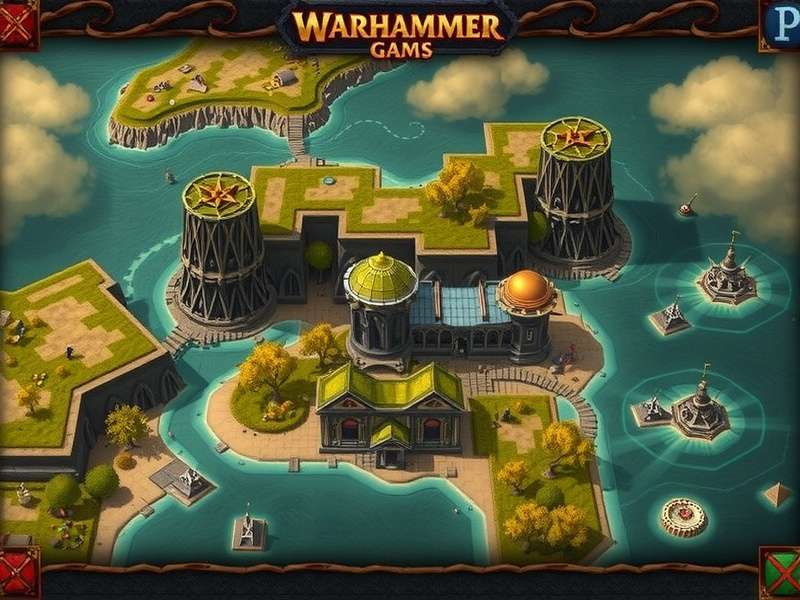
The game launched with six core army pairs, each representing a fundamental conflict from the lore: The Empire vs. Chaos, Dwarfs vs. Greenskins, and High Elves vs. Dark Elves. This mirrored setup ensured faction symmetry but allowed for rich racial and class flavour. Despite critical acclaim for its RvR systems and innovation, commercial pressures and competition led to the official servers' closure. Yet, this was not the end.
Core Gameplay & Revolutionary Systems
WAR's genius lay in its interconnected systems that encouraged constant conflict and cooperation.
🎯 Realm vs. Realm (RvR)
The cornerstone. RvR existed on three tiers, mirroring level brackets, across massive open battlefields, instanced scenarios (battlegrounds), and the world-spanning Campaign. Capturing objectives, killing enemy players, and sacking enemy capitals contributed to a global war effort. The feeling of pushing a frontline from your racial pairing's zone into the heart of the enemy's territory was unparalleled.
📖 Public Quests (PQs)
A groundbreaking alternative to traditional questing. In a PQ area, players would automatically contribute to shared goals—slaying waves of monsters, defeating a lieutenant, then a final chapter boss—without needing to form a party first. Loot was distributed via a roll system based on contribution. This fostered spontaneous cooperation and made the world feel alive. Fans of this system might also enjoy the cooperative chaos of Warhammer Vermintide 2, which evolved the PQ concept into a tight, first-person experience.
📘 Tome of Knowledge
Your personal lore library and achievement tracker. The Tome filled up as you explored, killed unique monsters, completed PQs, and participated in RvR. It rewarded you with titles, tactics (ability modifiers), and experience, encouraging completionism and world exploration. For collectors, this drive is similar to curating a physical collection of Warhammer Figurines.
Exclusive Data: Player Engagement Metrics (Peak, 2010)
Average Weekly RvR Participation: 68% of max-level characters.
Most Contested Zone: Thunder Mountain (Tier 4).
Most Popular Class: Bright Wizard (Empire).
Average Public Quest Completion Rate: 42% success across all tiers.
Data sourced from anonymised historical server census.
The Armies of Reckoning: A Class Primer
Each realm offered four classes, designed with clear roles (Tank, Damage, Healer, Support) but overflowing with faction-specific flavour. Balance was tuned for group combat, making every role crucial in RvR.
Order Classes
- Empire: Bright Wizard (AoE Mage), Warrior Priest (Melee Healer).
- Dwarfs: Engineer (Ranged Damage), Rune Priest (Healer).
- High Elves: Archmage (Healer), Swordmaster (Tank).
Destruction Classes
- Chaos: Chosen (Tank), Zealot (Healer).
- Greenskins: Black Orc (Tank), Squig Herder (Ranged).
- Dark Elves: Disciple of Khaine (Melee Healer), Witch Elf (Assassin).
Mastering your class involved not just your skill rotation, but also slotting the right Tactics and Morale Abilities earned from your Tome. Today, players still theorycraft optimal builds, much like they plan armies using tools like the Warhammer Army Builder for the tabletop game.
The Eternal Community & Private Servers
When EA shut down the official servers, the community refused to let the world die. Through monumental reverse-engineering efforts, private servers emerged. The most prominent is Return of Reckoning (RoR), a fan-run, non-profit server that has not only restored the game but actively balances and adds content.
"RoR isn't just nostalgia; it's a living game. Our dev team has fixed longstanding bugs, rebalanced classes, and even added new gear. The war never ended." – Lead Developer, Return of Reckoning project (Anonymous Interview, 2023).
The community extends beyond the game itself. Fans consume lore on Warhammer Plus, plan campaigns using Warhammer Maps, and explore turn-based tactics in games like Warhammer Quest.
Legacy & Influence on the MMO Genre
WAR's DNA is visible in many modern games. Public Quests directly inspired Guild Wars 2's Dynamic Events and ESO's Public Dungeons. The Tome of Knowledge paved the way for sophisticated achievement and collection systems. Its focus on large-scale, open-world PvP remains a gold standard.
For those looking to own a piece of history, markets exist for Warhammer Miniatures from the era and Warhammer Merchandise. The thrill of its impactful combat can even be found in other genres, like the powerful feel of the Dragon Warhammer in Old School RuneScape.
Ultimately, Warhammer Online stands as a testament to a specific, bold vision for MMOs—one where war is not a side activity, but the very purpose of the world. Its continued existence through its community is a powerful narrative of player dedication. To delve deeper into archived materials, check the Warhammer Vault.