1. Introduction to the Necrons
The Necrons are a race of soulless, undying automatons—once flesh-and-blood beings known as the Necrontyr. Millennia ago, they traded their mortal forms for living metal in a desperate pact with the C'tan, the star gods. Now they roam the galaxy in silent tomb ships, awakening from eons of slumber to reclaim what was once theirs. In the current Warhammer 40k meta, they are a dominant force, blending relentless durability with devastating firepower. Their arrival on the battlefield signals death, methodical and absolute.
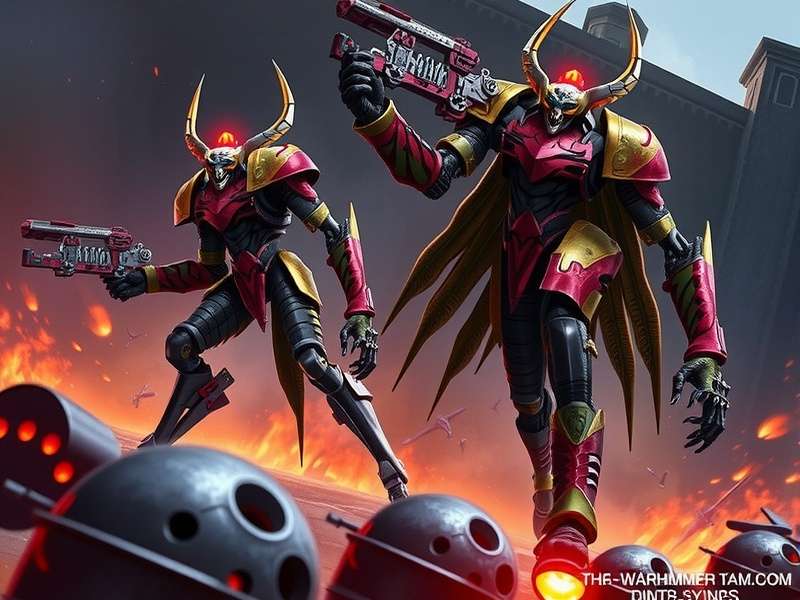
What makes the Necrons truly terrifying is not just their firepower, but their resilience. Every Necron warrior is a self-repairing entity of living metal. Gauss flayers disintegrate matter at the molecular level. Their crypteks manipulate time and space as casually as a mortal might write a letter. And at the head of it all stands the Silent King, Szarekh, who once led his people into damnation and now seeks redemption—or annihilation.
2. Origins of the Necrontyr
Before they were Necrons, they were the Necrontyr—a short-lived, bitter species cursed with cancers and plagues. Their star-faring empire was built on suffering and ambition. They envied the immortal Old Ones, who towered above them in power and longevity. This jealousy ignited a war that would consume the galaxy: the War in Heaven.
The War in Heaven
The Necrontyr threw everything at the Old Ones, but were outmatched by psychic might and advanced technology. Desperate and on the brink of extinction, they turned to the C'tan—vast, incomprehensible entities of pure energy who fed on stars. The C'tan offered a terrible bargain: immortality in exchange for servitude. The Necrontyr accepted, undergoing the process of biotransference. Their souls were devoured, their bodies were remade as living metal, and the Necrons were born.
The Great Awakening
After the War in Heaven, the Necrons entered a self-imposed slumber in their tomb worlds, waiting for the galaxy to heal. But their awakening has begun. Tomb worlds are stirring across the Imperium, and the Necron legions are rising once more—this time without masters, for they shattered the C'tan and now answer only to their own dynastic lords.
3. Necron Society & Hierarchy
Necron society is a rigid, feudal structure frozen in amber. Each dynasty is ruled by a Phæron or Overlord, with a strict caste system that mirrors the old Necrontyr nobility. At the top sits the Triarch—a council of three, led by the Silent King. Below them, the dynasties bicker, scheme, and occasionally go to war.
The Dynastic System
Each dynasty controls its own tomb world, fleets, and legions. Some, like the Sautekh, are expansionist and ruthless. Others, like the Nihilakh, are proud and territorial. The dynasties rarely unite, save under the banner of the Silent King—but even then, loyalty is brittle.
The Triarch
The Triarch was once the governing body of all Necron dynasties, composed of the Silent King and his two lieutenants. After biotransference, the Silent King dissolved the Triarch and went into self-imposed exile. But he has returned, and his presence is reshaping Necron politics. The Triarch now serves as a unifying force, though many dynasties resist its authority.
The Silent King
Szarekh, the Silent King, is the most tragic figure in Necron lore. He made the pact with the C'tan, and he bears the weight of his people's damnation. He now seeks to reverse biotransference—to restore the Necrontyr souls—or, failing that, to extinguish all life in the galaxy as an act of vengeance. His rules over the Necron legions with an iron will, but his silence speaks volumes.
4. Necron Technology & Warfare
Necron technology is indistinguishable from sorcery to lesser races. Their weapons and machines are forged from living metal, capable of self-repair and adaptation. Every Necron warrior is a walking arsenal, and their war machines defy the laws of physics.
Living Metal and Self-Repair
Living metal is the foundation of Necron existence. It flows like liquid, hardens like diamond, and regenerates damage over time. A Necron warrior that is "destroyed" will often reassemble itself hours later, unless its engrammic core is shattered. This makes them incredibly durable on the tabletop, with the ability to reanimate fallen models.
Gauss Weaponry
Gauss flayers, blasters, and cannons use a molecular stripping field to peel away matter layer by layer. A single hit can reduce a Space Marine in power armour to a cloud of atoms. Gauss weapons are devastating against heavy infantry and vehicles alike, and their glancing damage mechanism makes them reliable even against tough targets.
Phase Shifting and Teleportation
Necron units can phase out of reality, becoming intangible and invulnerable before reappearing elsewhere. This technology enables hit-and-run tactics, deep strikes, and escape from certain death. The Deceiver shard of the C'tan uses this to sow chaos across the galaxy.
The Dolmen Gates
The Dolmen Gates are Necron equivalents of the Webway—tunnels through the Warp that allow rapid interstellar travel. Unlike the Webway, Dolmen Gates are crude and violent, tearing through the fabric of reality. The Necrons use them to launch surprise attacks deep into Imperial space.
5. Major Necron Dynasties
There are countless dynasties, but a few dominate the lore and the tabletop meta. Each has its own colour scheme, playstyle, and character.
Szarekhan Dynasty
Ruled by the Silent King himself, the Szarekhan dynasty is the most powerful and mysterious. They use deep bronze and green colour schemes, and their playstyle focuses on durability and command. Szarekh leads from the front, and his presence inspires nearby Necron units to fight beyond normal limits.
Sautekh Dynasty
Under the ruthless Overlord Imotekh the Stormlord, the Sautekh dynasty is expansionist and militaristic. Their colours are gold and green. They excel at ranged warfare and tactical flexibility, with bonuses to ballistic skill and overwatch. Imotekh is one of the most dangerous Necron characters in the current edition.
Nihilakh Dynasty
The Nihilakh are proud, isolationist, and obsessed with their ancient territories. Their colours are blue and gold. On the tabletop, they gain bonuses when defending objectives, making them a top-tier choice for players who favour a hold-and-annihilate strategy.
Mephrit Dynasty
The Mephrit are aggressive and short-tempered, favouring overwhelming firepower. Their colours are orange and black. They gain bonus range and armour penetration on their weapons, making them a brutal offensive force. If you love melting enemy units before they can react, Mephrit is your dynasty.
Each dynasty offers unique stratagems and relics, and many players choose to build their army around a specific dynasty's strengths. For a deeper breakdown, check out the Warhammer Wiki for dynasty-specific tactics.
6. Necron Units & Characters
The Necron range is one of the most diverse in Warhammer 40k. From basic warriors to towering Monoliths, every unit has a role.
Necron Warriors
The backbone of any army. Armed with gauss flayers or reapers, they are slow but incredibly tough. Their Reanimation Protocols allow them to return to battle, making them a nightmare to fully eliminate. A full squad of 20 Warriors is a cornerstone of competitive lists.
Immortals
Elite infantry with better armour and firepower. They carry either gauss blasters (anti-infantry) or tesla carbines (anti-horde). Immortals are durable and hit hard, often used to hold midfield objectives or support an Overlord's advance.
Lychguard
The bodyguards of Necron nobility. Armed with warscythes or hyperphase swords and shields, they are deadly in melee and almost impossible to shift. A unit of Lychguard with shields can absorb an absurd amount of damage, protecting your characters from assassins.
Crypteks
Crypteks are Necron techno-sorcerers, wielding devices that manipulate time, space, and energy. They can buff friendly units, debuff enemies, or deal direct damage. The Technomancer can repair vehicles and warriors, while the Chronomancer grants re-rolls and invulnerable saves. A must-have in most competitive lists.
Canoptek Constructs
Scarab swarms, Wraiths, Spyders, and Acanthrites. These are semi-autonomous machines that support the Necron war effort. Scarabs are cheap, fast, and perfect for screening or tying up enemy units. Wraiths are fast, durable, and hit hard in melee. Canoptek units are versatile and often used to fill gaps in a list.
Monoliths and Doomsday Arks
Monoliths are iconic Necron vehicles: massive, teleporting fortresses that can deploy Warriors directly into the fray. Doomsday Arks provide heavy artillery, with a cannon that can delete tanks and monsters. Both are centre-pieces that draw fire and demand answers from your opponent.
For a full unit breakdown and points updates, visit the Total War Warhammer III section, which includes cross-game comparisons.
7. Playing Necrons on the Tabletop
Necrons are a durability-focused army that rewards patience and positioning. In the current meta (as of 2025), they sit comfortably in the upper tiers, with several competitive builds.
Army Composition
Most successful lists include a core of 2–3 blocks of Warriors with a Technomancer or Chronomancer, supported by Immortals and a unit of Lychguard. Heavy support comes from Doomsday Arks or a Monolith. Deep strike threats like Ophydian Destroyers or a Night Scythe add pressure.
Tactics and Strategies
Key tactics for Necron players:
- Play the mission – Necrons excel at holding objectives. Use your durability to force your opponent to overcommit.
- Protect your characters – Overlords and Crypteks are force multipliers. Screen them with Warriors or Lychguard.
- Use Reanimation Protocols wisely – Don't waste resurrection on small units. Keep your blocks big.
- Deny primary – Your opponent will struggle to shift you. Make them pay for every objective they try to take.
Best Units in Current Meta
According to recent tournament data, the standout Necron units are: Szarekh (the Silent King), Lychguard with shields, Doomsday Arks, and Canoptek Wraiths. Flayed Ones are also seeing a resurgence due to their deep strike and melee output. For a full tier list, check the Total Warhammer community downloads.
8. Necrons in the Lore
The Necrons have a rich and tragic backstory that spans millions of years. Their lore is filled with betrayal, loss, and cold fury.
The Fall of the Necrontyr
The Necrontyr were a race of scientists and conquerors, but their bodies were weak. They built an empire among the stars, but always they were plagued by death. When they met the Old Ones, they begged for immortality. The Old Ones refused, and the Necrontyr declared war. It was a war they could never win.
Biotransference
The C'tan saw an opportunity. They promised the Necrontyr eternal life in exchange for their souls. In a horrifying ritual, the Necrontyr were stripped of their flesh and transformed into living metal. They became the Necrons—immortal, soulless, and enslaved to the C'tan. It was the greatest betrayal in galactic history.
The Awakening
For millions of years, the Necrons slept. But now they are waking. Tomb worlds are opening across the galaxy, and the Necrons are reclaiming their dominion. The Imperium, the Aeldari, the T'au—all are but insects before the Infinite Empire.
Key Events in M41–M42
In recent lore, the Silent King has returned, and the Necrons have become a major threat in the galaxy. The Pariah Nexus campaign saw Necron forces pushing deep into Imperial space, using their technology to create zones where the Warp itself is silenced. The Indomitus Crusade has clashed with Necron legions across dozens of systems, and the fate of the galaxy hangs in the balance.
9. Collecting & Painting Necrons
Necrons are one of the most rewarding armies to collect and paint. Their metallic bodies and glowing energy weapons offer endless opportunities for creativity.
Choosing a Dynasty Scheme
Your dynasty choice dictates your colour palette. Szarekhan uses bronze and green; Sautekh uses gold and green; Nihilakh uses blue and gold; Mephrit uses orange and black. Many players also create custom dynasties, which is fully supported by the rules.
Painting Techniques
Metallics are your friend. A basecoat of Leadbelcher, a wash of Nuln Oil or Agrax Earthshade, and a drybrush of Necron Compound will give you tabletop-ready results in minutes. For the green glow, use Tesseract Glow or a blend of Moot Green and White Scar. Edge highlighting makes the models pop.
Converting and Kitbashing
Necrons are surprisingly easy to convert. Their modular bodies allow for weapon swaps, pose changes, and even cross-kit conversions with Warhammer Figurines. Popular conversions include turning a Triarch Stalker into a spider-like horror or using Canoptek bits to create custom Wraiths.
For more painting guides and community showcases, visit Warhammer TV and the Warhammer Community Downloads section.
10. Frequently Asked Questions
Are Necrons good in 10th edition?
Yes. Necrons are a top-tier faction in 10th edition, with strong durability and flexible list-building options. They perform well in both casual and competitive play.
What dynasty is best for beginners?
Mephrit or Sautekh are great for beginners. They offer straightforward bonuses (more damage or better range) and are forgiving on the tabletop.
How many Necron warriors should I buy?
Start with 20–30 Warriors. They are the core of most lists and give you a solid foundation. Add Immortals and a Cryptek next.
Can I mix dynasties in one army?
In casual games, yes. In tournament play, you lose dynasty bonuses if you mix. Most competitive lists stick to one dynasty for maximum synergy.
What is the Silent King's role in the current meta?
Szarekh is a force multiplier and a beatstick. He buffs all Necron units within 12", hits hard in combat, and is surprisingly durable. He is an auto-include in many competitive lists.
Where can I download Necron army lists?
Check the Warhammer Community Downloads for free PDFs, list examples, and quick-reference sheets.
The Legacy of the C'tan
The C'tan were once the masters of the Necrons, but their greed led to their downfall. After the War in Heaven, the Necrons—led by the Silent King—turned on their oppressors and shattered them into shards. These shards are now bound into living metal prisons, used as weapons by the Necrons. The Transcendent C'tan shard is a centrepiece model that can dominate the battlefield, but it comes at a steep points cost. The lore of the C'tan is a cautionary tale: even gods can be broken.
Necron Fortifications and Tomb Worlds
Every Necron army is anchored to a tomb world: a planet-sized fortress that contains billions of dormant warriors, vast factories, and weapons that can crack planets. Tomb worlds are protected by Gauss pylons, orbital defences, and layers of living metal. In the game, fortifications like the Gauss Pylon provide devastating long-range firepower, though they are rarely seen outside of apocalypse games. The true power of the Necrons lies not in their armies, but in their ability to turn entire worlds into weapons.
The Role of the Triarch Praetorians
Triarch Praetorians are enforcers of the Triarch's will. They are not bound to any single dynasty, and they answer only to the Silent King. Armed with voidblades and particle casters, they are deadly in melee and at range. Their presence on the battlefield signals the direct involvement of the Triarch, and they are often used as elite shock troops. In the lore, they have been known to execute entire dynasties that defy the Silent King's commands.
Necron vs. Other Factions
When facing the Imperium, Necrons are a chilling mirror: they represent what humanity could become if it traded its soul for immortality. Against the Aeldari, Necrons evoke ancient hatreds from the War in Heaven. Against the T'au, they are an unstoppable force that cannot be negotiated with. Each match-up offers unique tactical challenges, and Necron players must adapt their strategies to overcome the strengths of their foes. For cross-faction tactics, the Total War Warhammer III community has extensive discussions.
The Future of the Necrons
With the return of the Silent King and the ongoing Pariah Nexus campaign, the Necrons are poised to play a central role in the future of Warhammer 40k. Rumours of new models, including a refreshed Monolith and new character releases, have been circulating in the community. Games Workshop has been expanding the Necron range steadily, and many believe that the 10th edition codex will bring even more depth to the faction. Keep an eye on Warhammer TV for previews and reveals.
The Infinite Empire endures. The Necrons are patient, methodical, and utterly relentless. They have waited millions of years to reclaim the galaxy—and now, their time has come. Whether you collect them for their tragic lore, their stunning models, or their tabletop dominance, the Necrons offer a rich and rewarding experience for any Warhammer fan.
For weekly meta updates, battle reports, and community painting contests, join the conversation on Warhammer Community Downloads and follow the Games Workshop official site.